
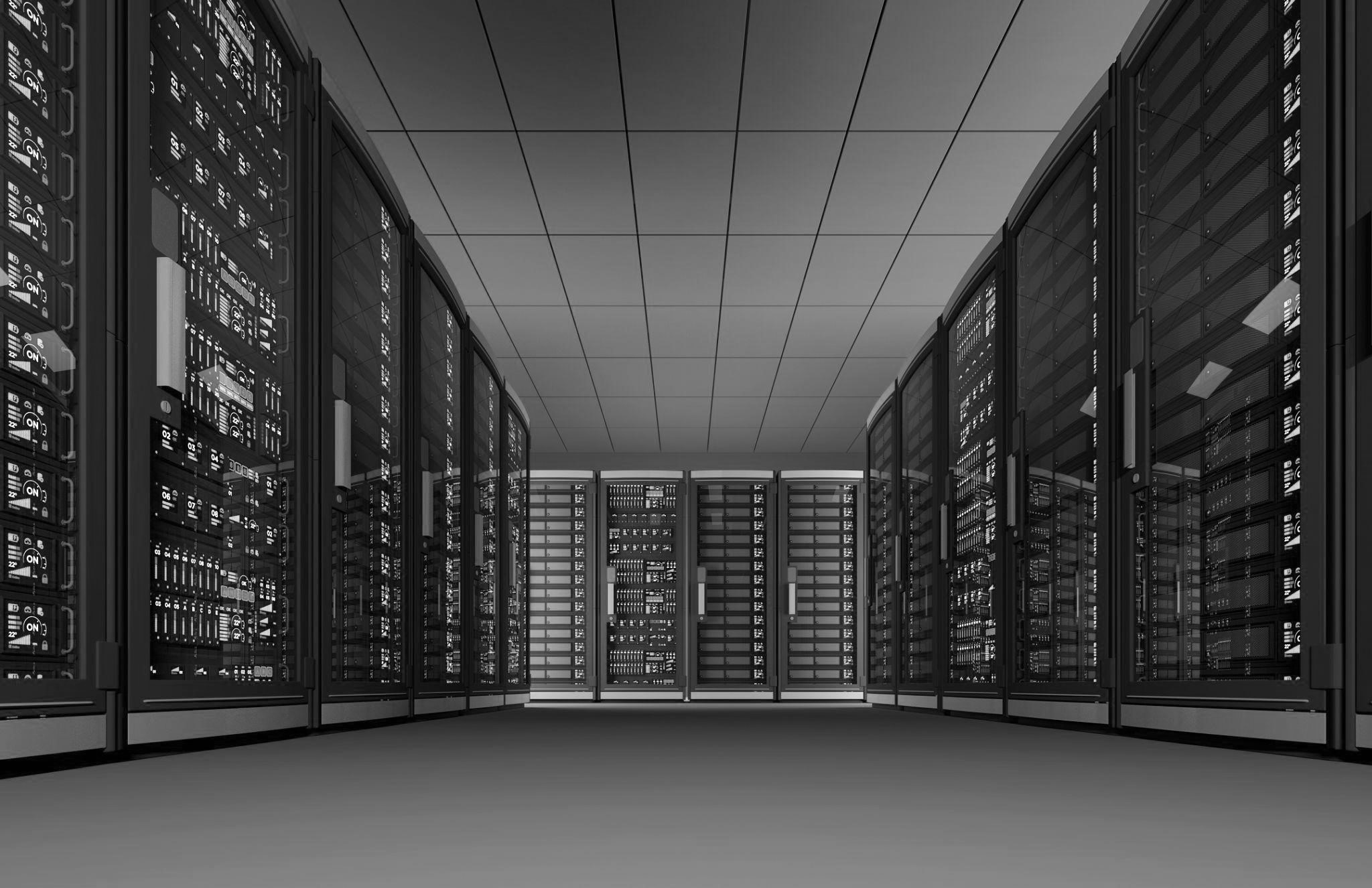
The electric bill showed up before the robots did.
That’s how Americans know something is real.
Not the TED Talks.
Not the glossy commercials showing smiling young professionals using artificial intelligence to organize grocery lists.
Not the billionaire in sneakers explaining how humanity is entering a new era of “digital transformation.”
No, sir.
People know something has arrived when the monthly utility bill suddenly looks like a threatening letter from a loan shark.
And now we’re there.
This week, the independent market monitor for PJM Interconnection — the nation’s largest electric grid operator — released one of the most important economic reports of the year.
Wholesale electricity prices across the PJM grid surged 76 percent in the first quarter of 2026.
That grid covers 13 states plus Washington D.C. and serves roughly 67 million people.
And the culprit?
Artificial intelligence data centers.
Now let’s stop right here because this is where the conversation usually breaks into two camps yelling past each other like drunks at a county fair.
One side says:
“These AI centers are sucking up all the water and electricity!”
The other side says:
“We have to build them or China wins!”
And here’s the uncomfortable truth: Both sides are right.
That’s what makes this story important.
Because America has wandered into one of those moments where economics, national security, technology, and ordinary people’s lives all crash into each other at the same intersection.
The report’s language was unusually blunt for bureaucratic America. It warned the impacts were:
“significant and irreversible.”
Now government reports usually read like sleeping pills with footnotes. So when accountants and grid managers start using words like “irreversible,” somebody somewhere is quietly panicking into a spreadsheet.
The biggest warning sign inside the report wasn’t even the 76 percent price jump.
It was this: Capacity costs surged 398 percent.
Translation for normal human beings: The electric system is screaming that there is not enough future power generation lined up for what’s coming.
And what’s coming is staggering.
The AI boom is consuming electricity on a scale most Americans still do not fully grasp.
These aren’t little office buildings.
Modern AI campuses can consume as much electricity as entire industrial zones.
Thousands upon thousands of specialized chips run around the clock generating heat hot enough to require industrial-scale cooling systems just to keep the servers alive.
That means:
- giant substations
- massive transformers
- cooling towers
- water systems
- backup generators
- dedicated transmission lines
The cloud, it turns out, weighs several million tons and needs enough power to light half a state.
Northern Virginia has become the epicenter of this transformation because it already had the internet backbone infrastructure. Now it has the densest concentration of data centers on Earth.
And the electric meter is spinning so fast it’s making politicians nervous.
The report recommended something extraordinary:
make the data centers bring their own power generation instead of drawing from the public grid.
Now that is a political hand grenade.
Because the moment ordinary Americans hear:
“Your power bill is climbing so trillion-dollar tech companies can train AI systems,”
the debate changes overnight.
Suddenly this is no longer a technology story.
It becomes:
- a retiree story
- a homeowner story
- a small-business story
- a factory story
- an affordability story
And Americans already feel like they’re being nickel-and-dimed to death.
But here’s where this gets complicated.
Because while Americans argue over cooling towers and electric bills, China is not slowing down.
Not even a little.
Beijing sees artificial intelligence the same way previous generations saw:
- oil
- nuclear weapons
- aircraft carriers
- semiconductors
- space technology
As strategic power.
The Chinese government understands something many Americans are only beginning to realize:
compute capacity may become one of the defining forms of geopolitical strength in the 21st century.
This isn’t just about chatbots writing college essays.
AI affects:
- military targeting
- autonomous drones
- cyberwarfare
- logistics
- intelligence analysis
- manufacturing
- pharmaceuticals
- surveillance
- financial systems
In military terms, computing power is becoming something like oil reserves or aircraft production capacity once were.
And Washington knows it.
That’s why nobody in serious national security circles believes the United States can simply stop building AI infrastructure.
If America slows while China accelerates, the balance of technological power shifts overseas.
Historically, that has not worked out especially well for the United States.
The countries that mastered:
- steel
- shipbuilding
- oil refining
- aircraft production
- semiconductor manufacturing
usually ended up dominating their eras.
AI may be another one of those moments.
But here’s the political problem nobody has solved yet:
How do you stay competitive without crushing the people paying the electric bills?
That’s the real debate now.
Not whether AI should exist.
Not whether data centers should exist.
The real question is:
Who pays for the infrastructure required to support them?
Because right now, according to the PJM report, much of that cost is being socialized across ordinary ratepayers.
And Americans are beginning to notice.
What makes this especially ironic is that Silicon Valley spent twenty years marketing itself as “light,” “digital,” “green,” and “post-industrial.”
Turns out AI is one of the most industrial things America has built in decades.
It requires:
- concrete
- copper
- steel
- cooling water
- natural gas
- substations
- turbines
- transmission corridors
- and gigantic amounts of electricity
This isn’t a smartphone app economy anymore.
This is heavy infrastructure.
The digital age has started looking a whole lot like the industrial age with fiber-optic cables instead of smokestacks.
And now the political fights are beginning.
Pennsylvania Gov. Josh Shapiro has openly discussed the possibility of leaving the PJM grid if prices keep rising.
Think about that.
A governor is publicly floating departure from a regional electric market because AI demand is warping prices.
Utilities are nervous.
Regulators are nervous.
Governors are nervous.
The Federal Energy Regulatory Commission is nervous.
And underneath all of it is a simple truth ordinary Americans already understand instinctively when they see those giant anonymous buildings going up outside town:
These are not warehouses.
They are the factories of the next economic era.
The railroad age built rail yards.
The oil age built refineries.
The industrial age built steel mills.
The interstate era built highways.
The AI age builds data centers.
And just like every great infrastructure revolution before it, somebody eventually gets handed the bill.
Right now, the country is arguing over who that somebody ought to be.
And then there’s the water.
Which may become the next political explosion.
Because Americans will tolerate a lot before they start worrying about two things:
- the lights staying on
- and whether there’s enough water
Once people think either one is threatened, the conversation gets emotional fast.
AI data centers consume staggering amounts of water because all those AI chips generate enormous heat.
Heat kills servers.
So the centers must cool them constantly.
- Some use chilled water systems.
- Some use evaporative cooling towers.
- Some recycle water efficiently.
- Others consume millions of gallons daily depending on design, climate, and workload.
Now imagine telling people in drought-prone areas:
“Please take shorter showers so the chatbot can keep generating memes.”
That is not exactly a winning political slogan.
And this is where the public backlash starts becoming understandable.
People already see:
- reservoirs shrinking
- water restrictions increasing
- utility rates climbing
- lawns dying in summer heat
- cities struggling with growth
Then they hear one AI campus may consume as much water as a small town.
That creates a visceral reaction.
Especially in western states.
But even in wetter regions, communities are beginning to ask:
Who gets priority if demand keeps rising?
Because infrastructure always sounds abstract until resources become scarce.
And there’s another layer here nobody likes discussing openly:
The AI boom may force America to rethink its entire relationship with infrastructure abundance.
It’s estimated that by 2030, Texas could have more data centers than anywhere in the world.
For years, the country operated under the assumption that:
- electricity would always be available
- water systems would scale
- bandwidth would expand
- growth would continue quietly in the background
AI is stress-testing all of those assumptions simultaneously.
Suddenly utilities are asking:
- Can the grid handle this?
- Can water systems handle this?
- Who pays for upgrades?
- Should local residents subsidize global AI firms?
- Should new data centers be paused until infrastructure catches up?
That’s why some regulators are now discussing requiring AI campuses to:
- build their own power generation
- recycle water aggressively
- use reclaimed wastewater
- develop closed-loop cooling
- or even locate near abundant water and power sources
In other words:
if you want to build the factory of the future, you may need to build the infrastructure too.
And this circles back to why ordinary people feel uneasy when they see giant data centers arriving quietly in their communities.
The public senses something important before policymakers do:
The AI revolution is not weightless.
It has a physical footprint.
A very large one.