
But That Would Have Ruined the Internet’s Favorite Data Center Horror Story
A Navajo woman looks into the camera and says:
“There is no running water.”
And boom. That’s the clip. That’s the emotional payload. That’s the part people remember.
Not the zoning notes.
Not the engineering conditions.
Not the infrastructure requirements.
Just the line.
Because in the modern internet economy, outrage travels first class. Context rides in the baggage compartment.
The video making the rounds about a proposed data center project in Page frames the story like a scene from a dystopian movie: desperate desert communities, no water, giant AI server farms arriving to consume what little remains.
Only there’s a problem.
Page actually has running water.
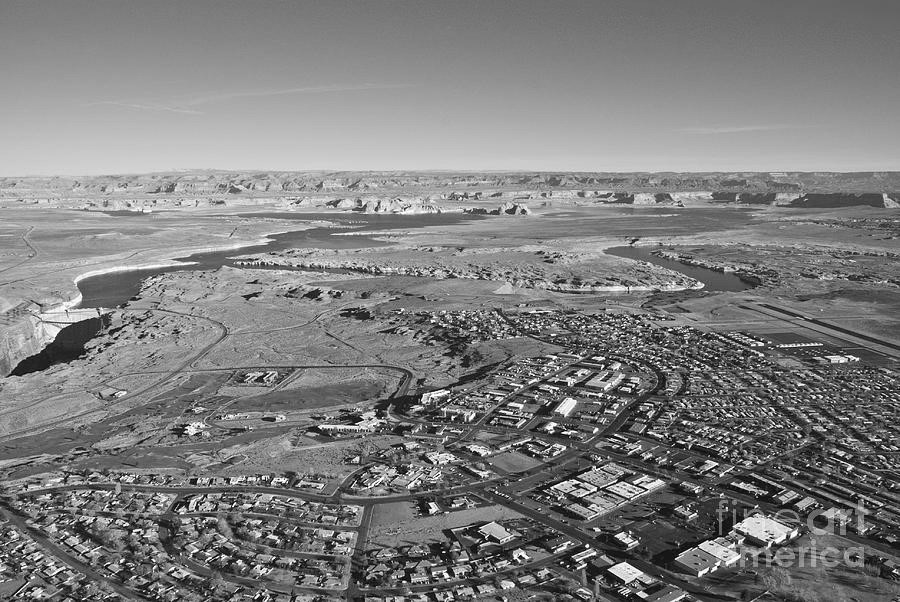
The city sits beside Lake Powell and operates municipal water infrastructure. Hotels function. Restaurants operate. Tourists flood the place every year.
Now, the surrounding portions of the Navajo Nation absolutely have longstanding water-access issues. Some homes still haul water manually. That’s real, serious, and shameful in a modern country.
But those realities are not identical.
And this is where journalism either earns its keep or turns into theater.
Because buried down inside the public notes — the part nobody on social media ever reads because it’s not emotionally cinematic enough — the city reportedly attached major conditions to any possible project approval:
- Closed-loop cooling systems.
- No local water usage.
- Developer-provided power generation.
- No tapping into the city electrical system.
That changes the story quite a bit, doesn’t it?
Suddenly this isn’t:
“The city is giving away scarce water and power to AI billionaires.”
Instead it becomes:
“The city is attempting to impose strict infrastructure conditions before any approval even exists.”
That’s not nearly as viral.
What makes the story even stranger is that Page is already quietly using AI-driven municipal systems. To handle seasonal tourist traffic and dangerous desert driving conditions — glare, blowing dust, deep shadows, and extreme heat — the city partnered with private firms to deploy AI-based traffic detection and smart intersection technology.
In other words, the same town being portrayed online as standing at the gates of an AI invasion is already using artificial intelligence to keep traffic moving and intersections safer.
The internet likes its villains simple. Giant gray buildings. Corporate logos. Servers humming in the dark. A struggling local resident standing in front of the camera.
Done. Narrative complete.
Only real life is usually a stack of boring PDF files from planning departments.
And here’s the thing nobody wants to admit: communities are not powerless in these fights.
Across America, local governments are:
- imposing moratoriums,
- requiring independent substations,
- mandating closed-loop cooling,
- restricting water withdrawals,
- limiting tax incentives,
- and forcing environmental reviews.
Some projects get approved. Some get watered down. Some die quietly after feasibility studies. Some never get past the land-sale phase.
But online, every proposal becomes a finished project by sundown.
That’s because fear compresses timelines.
The moment a city council discusses a possibility, social media presents it like bulldozers are already flattening grandma’s ranch while AI robots drink the aquifer dry.
And look — there are legitimate concerns about data centers.
Power demand is enormous.
Transmission lines reshape landscapes.
Noise complaints are real.
Cooling systems matter.
Rural communities worry they’re trading farms and open desert for giant anonymous metal warehouses.
Those are valid debates.
But if you leave out the fact that the city demanded closed-loop cooling and independent power generation, you’re no longer informing people. You’re steering them.
And none of this means the concerns are fake. Lake Powell itself is under real strain. Water levels have dropped dramatically over the years, affecting not just drinking supplies but hydroelectric power generation across the region. The Southwest is already wrestling with a collision of drought, population growth, rising electrical demand, and now the arrival of energy-hungry AI infrastructure. That is a legitimate public debate worthy of serious reporting.
But serious reporting also means acknowledging complexity. Closed-loop cooling systems dramatically reduce water use. Requiring independent power generation changes the equation again. Those details may not fit neatly into a viral narrative, but they matter if the goal is informing the public rather than emotionally steering it.
That’s advocacy-style storytelling disguised as journalism storytelling.
Old-school reporters used to call this “loading the frame.” You don’t technically lie. You just carefully remove the details that complicate the emotional conclusion.
And the funny thing is, the truth is actually more interesting.
Because what’s really happening across America is not some simple corporate land grab.
It’s a collision between AI and rural infrastructure, between national competition and local control, between economic development and environmental fear, and between communities desperate for tax revenue and citizens terrified of industrialization.
That’s the real story.
Not just a single sentence delivered into a camera.
So we circle back to the line that launched the outrage machine:
“There is no running water.”
Except there is.
And if the project ever moves forward, according to the city’s own public notes, the developers may not even be allowed to use the local water in the first place.
It’s easy to parachute into the desert, point a camera at pain, and leave before the zoning documents catch up with the narrative
Funny how the details that matter most never seem to make the viral clip.