
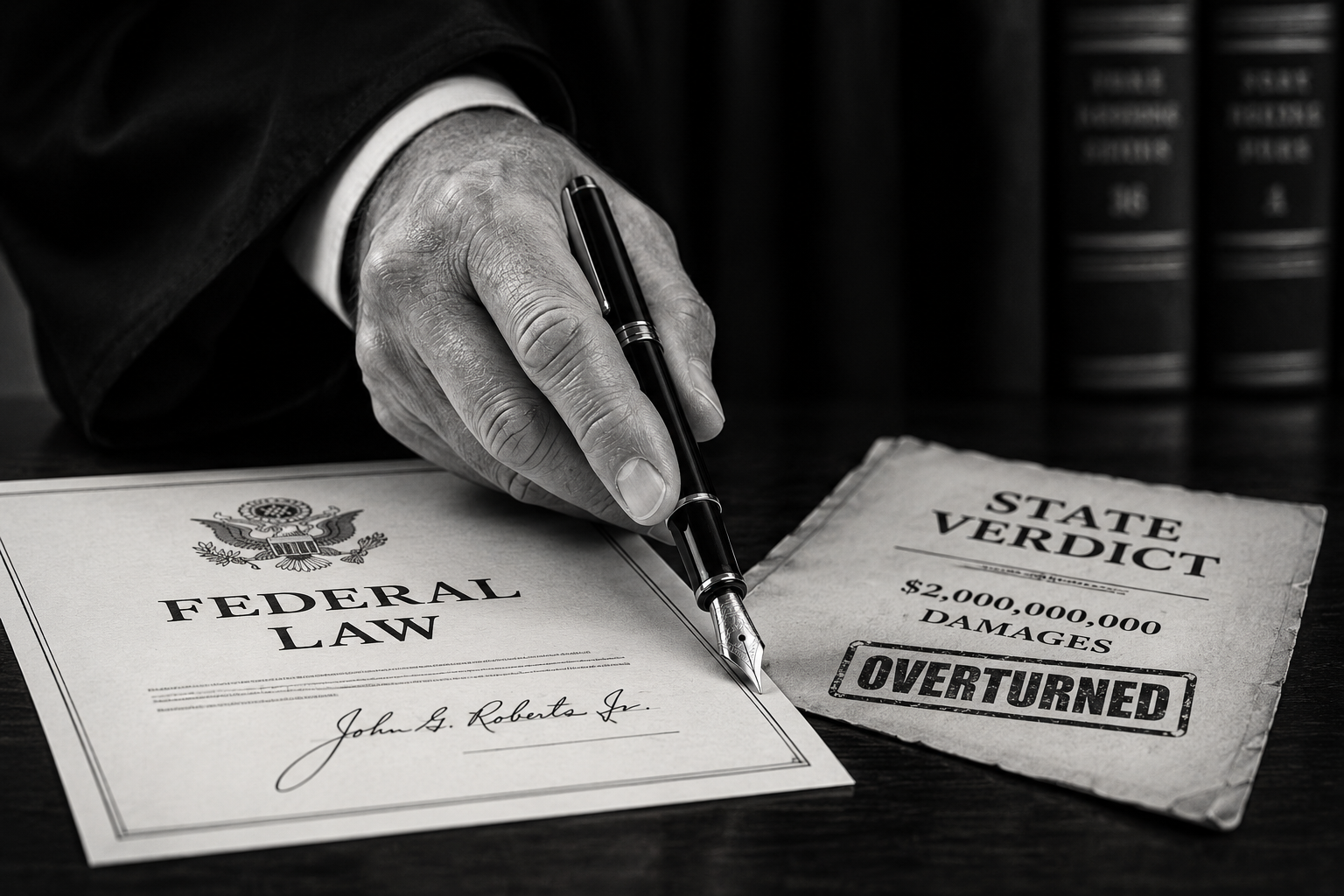
The headlines say the U.S. Supreme Court ruled for Monsanto.
That’s true.
It’s also the least interesting part of the story.
The Court, in a 7-2 decision, didn’t decide whether Roundup causes cancer. It didn’t declare glyphosate safe. It didn’t tell anyone to use—or not use—the weed killer.
Instead, the justices answered a much different question.
Who gets to decide what warning appears on the label?
For decades, the Environmental Protection Agency has reviewed pesticides under the Federal Insecticide, Fungicide, and Rodenticide Act—mercifully shortened to FIFRA. The EPA approved Roundup’s labeling and did not require a cancer warning.
Some state juries reached a different conclusion. They awarded plaintiffs millions—and in some cases billions—of dollars because Monsanto failed to include a warning that the EPA never required.
That collision finally reached the Supreme Court.
The majority said a state cannot effectively require a label different from the one approved under federal law. If Congress gave the EPA authority over pesticide labels, individual states cannot rewrite those labels through jury verdicts.
Whether you like Monsanto or not is beside the point.
This case wasn’t really about Monsanto.
It was about who runs the regulatory system.
Imagine if Florida required one warning label, California another, Texas a third, and New York a fourth. A company selling one product nationwide could find itself violating the law simply by crossing a state line.
The Court essentially said Congress created a national system for a reason.
That doesn’t mean people injured by products lose every legal remedy. Other claims may still be available depending on the facts of a case. What today’s decision says is that a company generally cannot be punished under state law for failing to print a warning that federal regulators never required.
That distinction matters.
We’re living through an era when Americans increasingly distrust federal agencies. Some believe agencies regulate too much. Others believe they don’t regulate enough.
But here’s the uncomfortable question.
If we no longer trust the federal experts, who replaces them?
A jury?
Fifty different juries?
Fifty state legislatures?
Or should every company print fifty different labels depending on which highway a truck happens to be driving?
Those aren’t hypothetical questions anymore.
They’re the practical consequences of how we balance federal authority with state power.
And if that sounds familiar, it should.
Just this week the Supreme Court has been wrestling with nationwide injunctions, immigration, executive power, and now pesticide labeling. Different cases. Same underlying question.
Who gets to make the rules for everyone else?
Sometimes the answer is Congress.
Sometimes it’s a federal agency acting under the authority Congress delegated.
Sometimes it’s the courts.
Today’s decision reminds us that before we argue about whether a warning should have been on the label, we first have to answer a simpler question:
Who holds the pen?