There are few things in politics more entertaining than watching a talking point age badly.
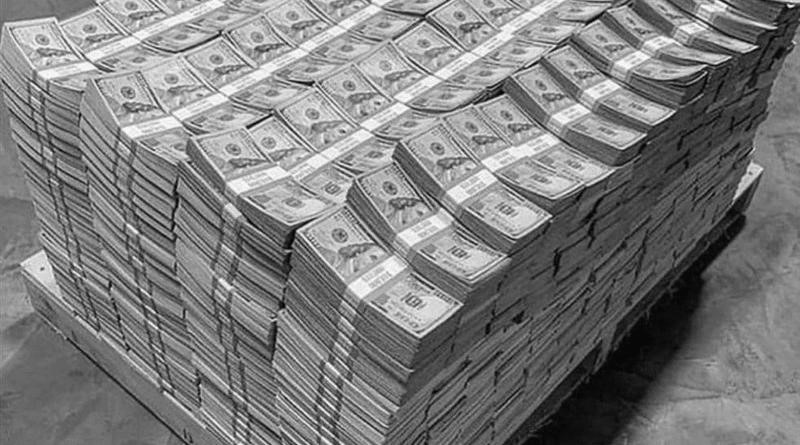
For years, Republicans dined out on the claim that Barack Obama “gave Iran billions.” You could set your watch by it. Cable hits, campaign rallies, Facebook posts with all-caps captions—there it was, over and over. Obama, they said, loaded pallets of cash and handed them to the ayatollahs.
Now comes Donald Trump, reportedly considering a deal that would unlock roughly $20 billion in frozen Iranian funds in exchange for one simple thing: no nukes.
Well.
Pull up a chair.
Because what we have here isn’t some bold new doctrine. It’s the same old math Washington keeps coming back to when it runs out of better ideas. You want to stop Iran from building a bomb, you’ve got three options: bomb them, invade them, or cut a deal. And since the first two tend to get Americans killed and oil prices sent into orbit, presidents—Democrat or Republican—eventually wander back to door number three.
And what’s behind that door?
Money. Not taxpayer money, mind you—let’s be honest about that. These are Iranian funds frozen under sanctions, the geopolitical equivalent of holding someone’s wallet and deciding when they get it back. But politically? It all spends the same.
Which brings us to the part where the irony gets thick enough to spread on toast.
Because the same voices that spent a decade hammering Obama for “appeasing Iran” are now preparing to explain why this time it’s different. This time it’s strength. This time it’s leverage. This time it’s… strategy.
Funny how that works.
To be fair, the circumstances aren’t identical. Obama negotiated in a conference room. Trump is doing it with a blockade and a loaded Navy just over the horizon. One was diplomacy with a smile; the other is diplomacy with a clenched fist.
But strip away the style, and the substance looks awfully familiar: You get rid of uranium, they get access to money.
And here’s the part nobody likes to say out loud: it might be the least bad option on the table.
Iran is closer to a bomb now than it was back in 2015. The clock is shorter, the margin for error thinner. You can posture all you want, but physics doesn’t care about politics. Enriched uranium is enriched uranium, no matter who’s in the Oval Office.
So yes, if this deal goes through, expect a sudden outbreak of selective memory in Washington. Watch the language shift. “Weakness” becomes “tough negotiation.” “Payoff” becomes “leverage.” The same policy, dressed up in a different suit.
And that brings us back to where we started.
All those years of outrage about Barack Obama “giving Iran billions.”
Here’s the part folks tend to leave out:
We had a deal.
Iran was capped.
The inspectors were in.
Then Donald Trump tore it up.
And Iran did exactly what you’d expect—they started enriching again.
Now, years later, we’re right back at the same table, with the same problem, using the same playbook.
Only this time, the price is higher, the uranium is hotter, and the speeches sound very different.
Turns out, the outrage wasn’t about the deal.
It was about who signed it—and who gets to sign the next one.
That’s the deal. That’s always been the deal.