
Every generation gets its government horror story.
Grandparents worried about black helicopters.
Parents worried about bar codes.
Now we’re worried that Washington is going to shut off our cars while we’re driving to the supermarket.
Progress, I suppose.
The latest rumor making the rounds says every 2027 automobile will come equipped with a government kill switch.
It’s usually accompanied by a grainy meme, a few alarming headlines, and the kind of confidence normally reserved for people who’ve never actually read a federal law.
Here’s the funny part.
The rumor isn’t entirely made up.
It just skipped a few important chapters.
Back in 2021, Congress passed the Infrastructure Investment and Jobs Act.
Buried inside was a provision directing the National Highway Traffic Safety Administration—NHTSA—to develop a new federal safety standard for what lawmakers called “advanced impaired driving prevention technology.”
That’s real.
Congress wasn’t asking for another study that would gather dust on a shelf.
It wanted NHTSA to write a rule requiring technology capable of preventing impaired people from driving.
Then reality interrupted.
Writing a law is easy.
Writing technology is hard.
Should the system use a breath sensor?
A touch sensor?
Artificial intelligence?
A camera watching the driver?
Some combination of all of them?
And what happens when the technology gets it wrong?
Can it tell the difference between someone who’s intoxicated and someone who’s exhausted after working all night?
What about a diabetic suffering low blood sugar?
Or a driver recovering from surgery?
Computers are wonderfully confident.
They’re not always wonderfully correct.
That matters when the computer is deciding whether your vehicle should move.
So NHTSA did what engineers usually do.
It slowed down.
The agency asked for public comments.
It studied competing technologies.
It evaluated reliability.
And in its latest report to Congress, it made something close to a bureaucratic confession.
This isn’t ready yet.
That’s where the Internet and reality part company.
As of today, there is no final federal rule.
No automaker is currently required to install this technology.
No announced production vehicle is federally mandated to include it.
Meanwhile, members of Congress have introduced legislation that would repeal or block the requirement before any final mandate ever takes effect.
None of those repeal efforts have become law.
So everyone is still arguing over something that hasn’t happened.
Now let’s talk about something that has happened.
Modern automobiles have quietly become rolling computers.
Many are connected to the Internet.
Many receive software updates while sitting in your driveway.
Many collect driving data.
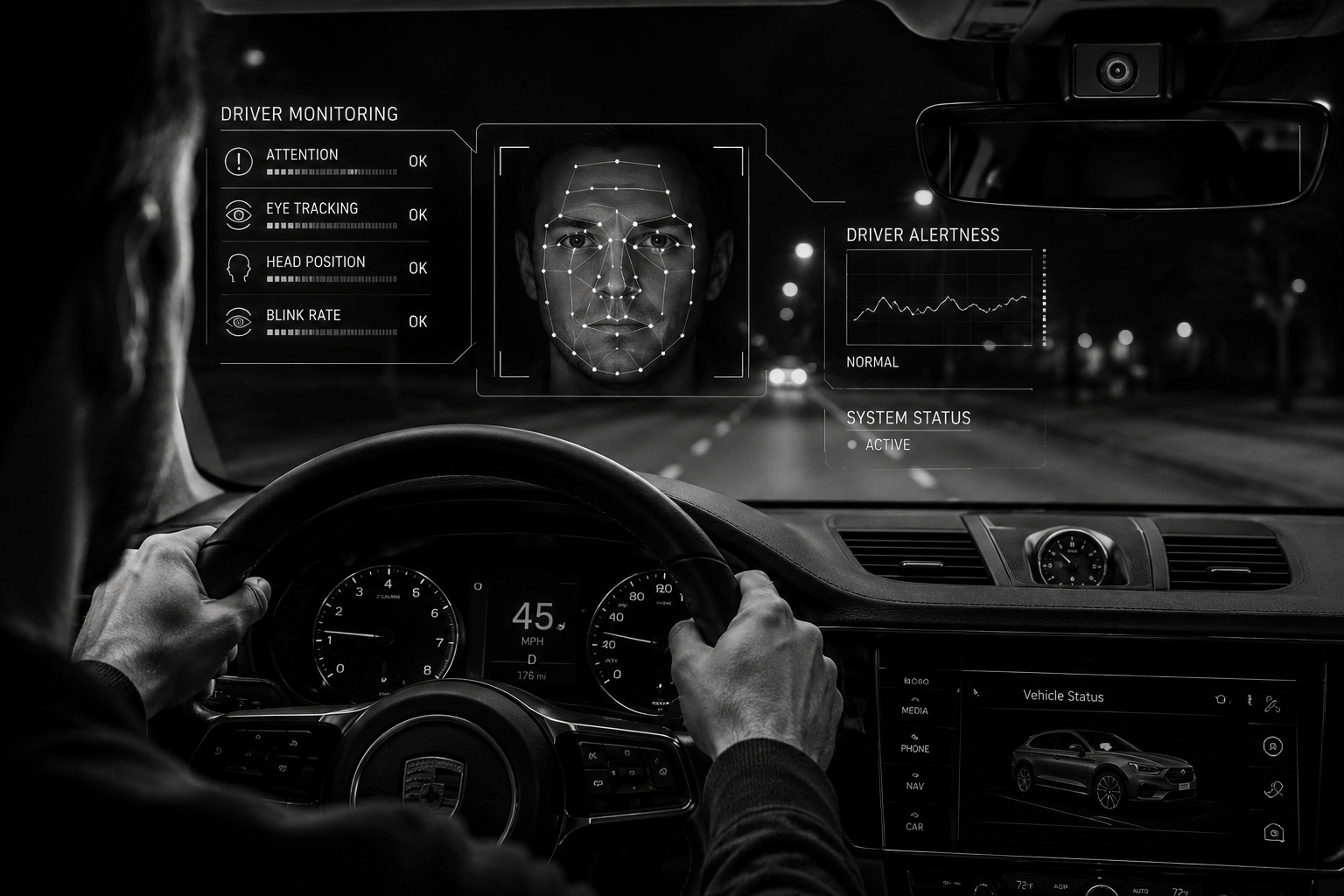
And an increasing number include cameras inside the vehicle that watch the driver for signs of distraction or drowsiness.
Those cameras aren’t rumors.
They’re already here.
Whether that’s a good thing depends on who you ask.
Safety advocates see lives saved.
Privacy advocates see another set of electronic eyes that didn’t exist 20 years ago.
Reasonable people can disagree.
What they shouldn’t do is confuse today’s technology with tomorrow’s regulations.
The bottom line is simpler than the memes make it sound.
There is no government remote shutdown button coming to your driveway tomorrow.
What does exist is an unfinished federal safety initiative aimed at reducing impaired driving.
Whether it ultimately becomes reality depends on Congress.
It depends on NHTSA.
It depends on automakers.
It depends on privacy concerns.
It depends on whether consumers will accept it.
And perhaps most importantly, it depends on whether engineers can build a system reliable enough to solve one problem without creating three new ones.
That’s the story.
Unfortunately, “Federal Rulemaking Continues” has never been much competition for “Government Kill Switches Are Coming.”
Rumors drive like they’re late for work.
The truth usually obeys the speed limit.